
In this post, we would like to compare and give a small overview about 4 types of different laser goggles.
We are going to set a few experiments
Full video of a laser goggles comparison
Experiment 1
Comparing all 4 types of laser goggles. How they protect from 10 watt+ laser on 10 cm range with 5% power?
Using 3 element lens. Duration – 1 sec.
Using an Arduino generator at 1Hz 5% duty ratio
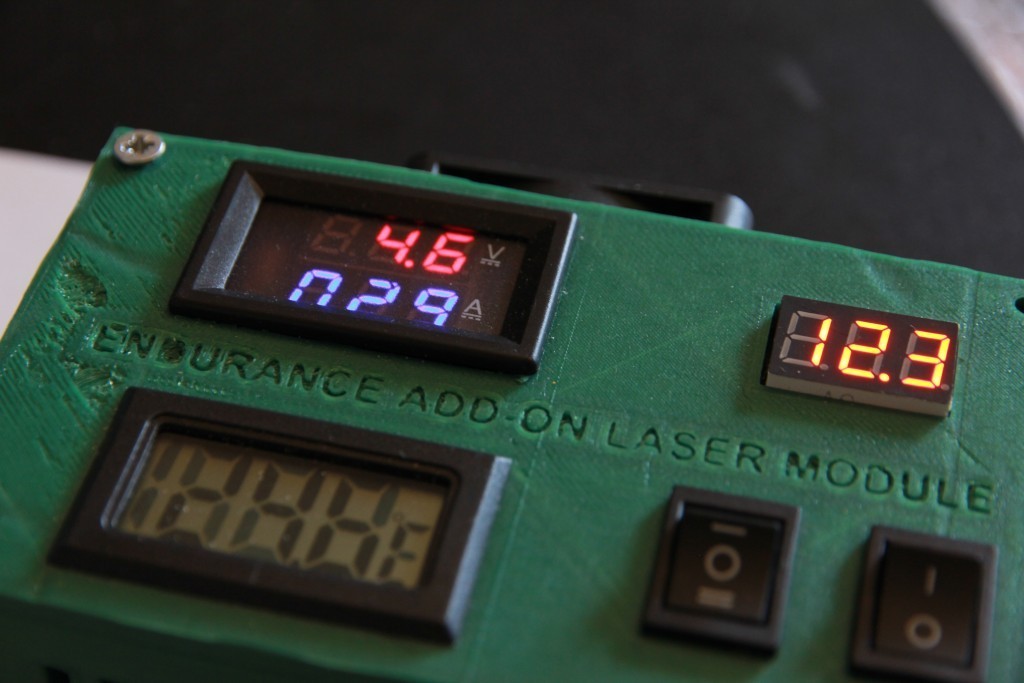
Parameters for laser box
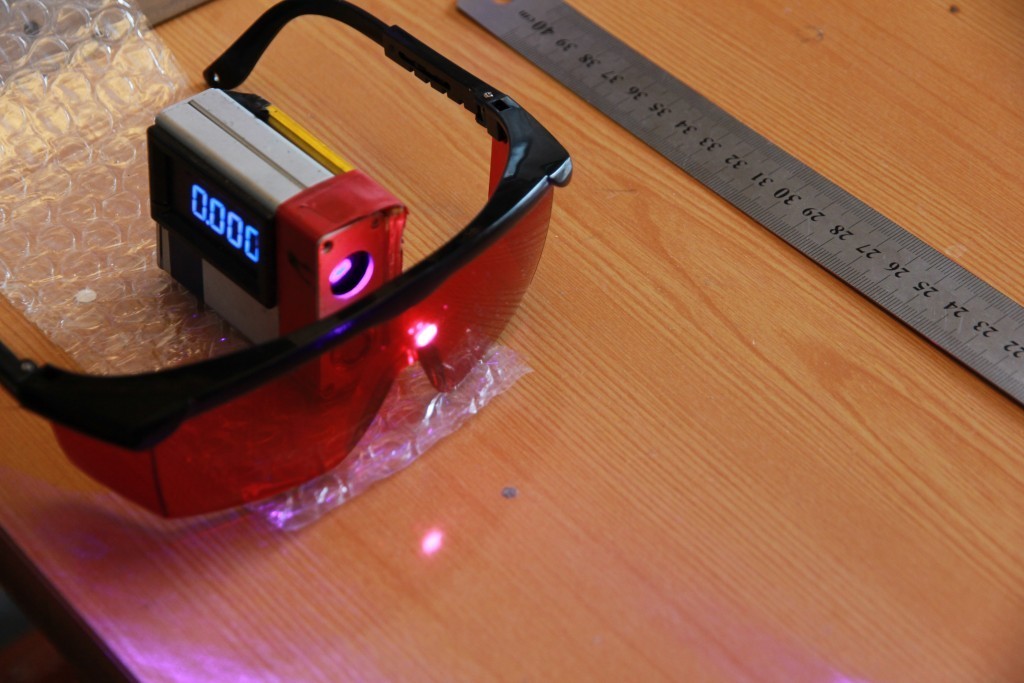
Red goggles test
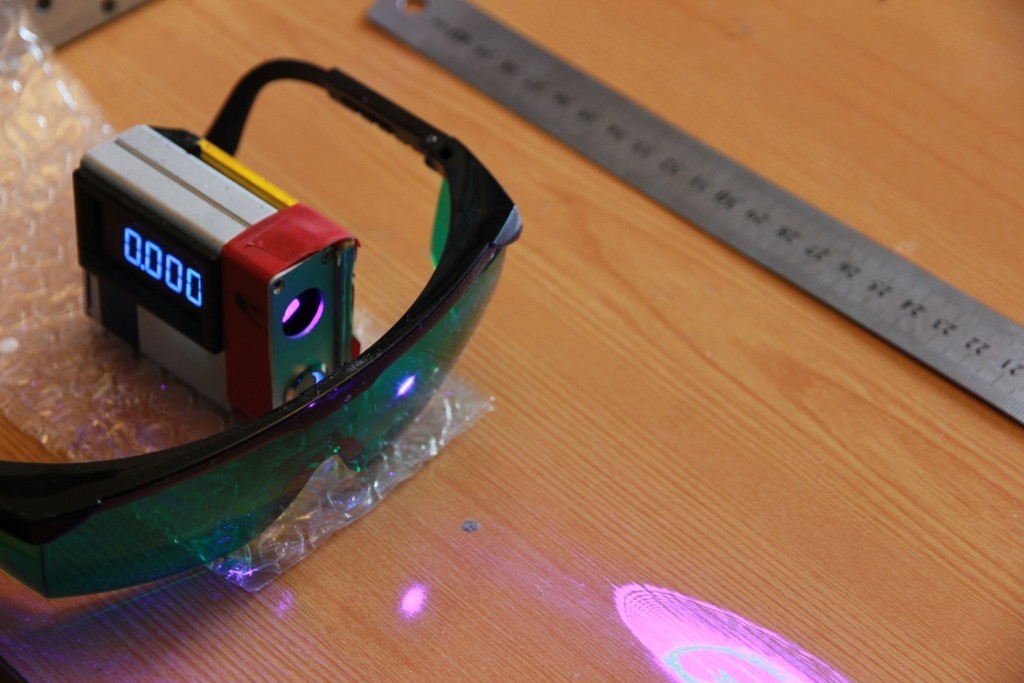
Green goggles test
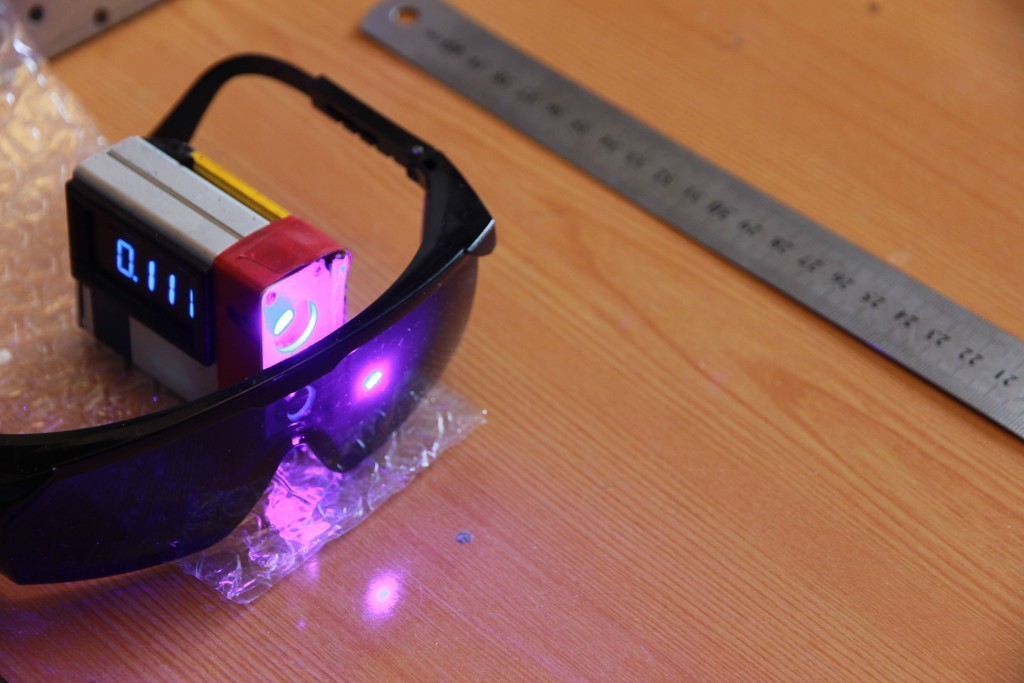
Blue goggles test
Dark green goggles test
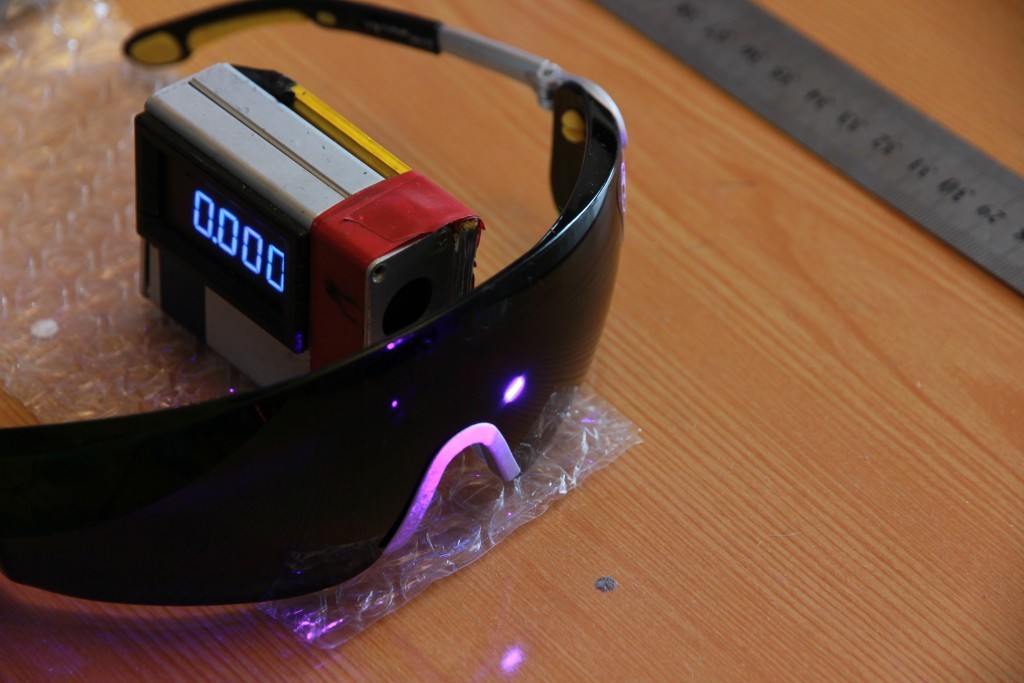
Experiment 2
Comparing all 4 types of laser goggles. How they protect from 10 watt+ laser on 10 cm range with 25% power?
Using 3 element lens. Duration – 1 sec.
25% power of 10 watt+ laser
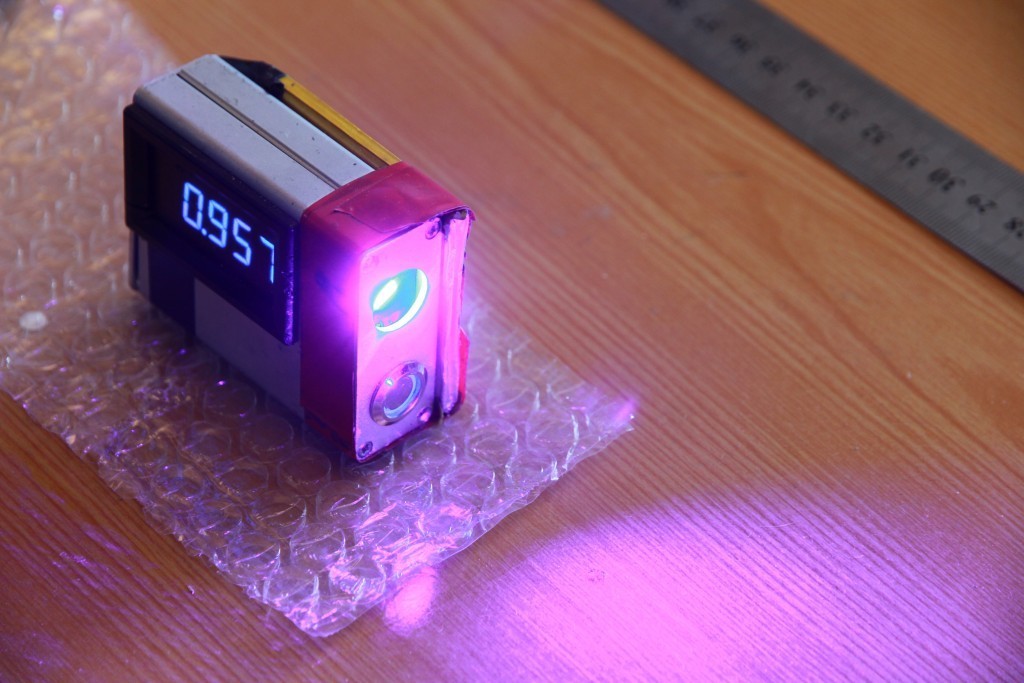
Red goggles test
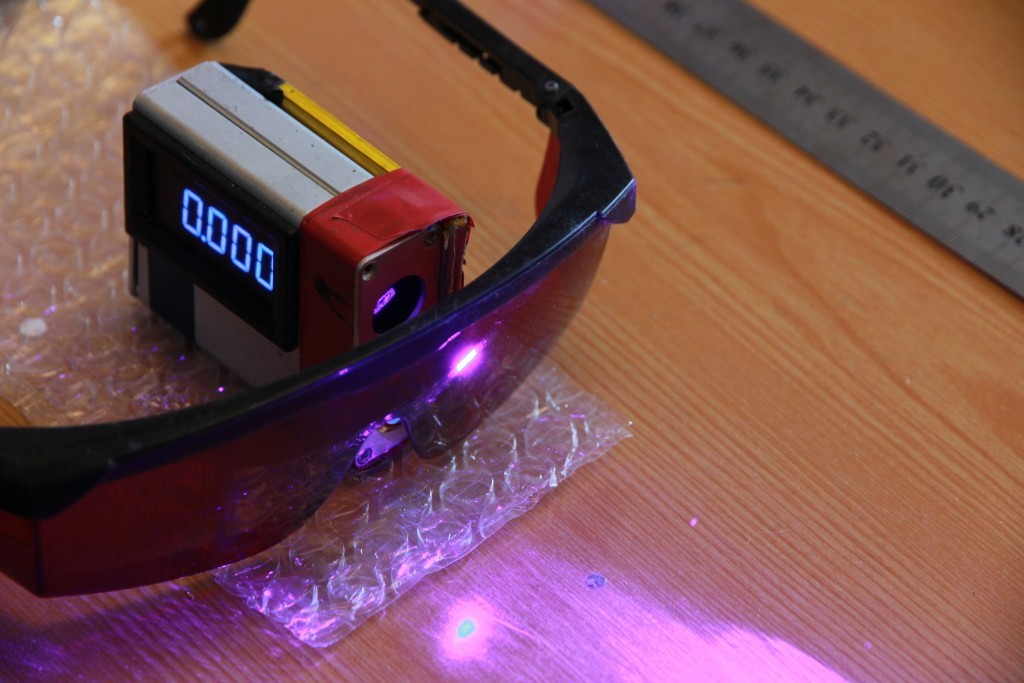
Red goggles after the test
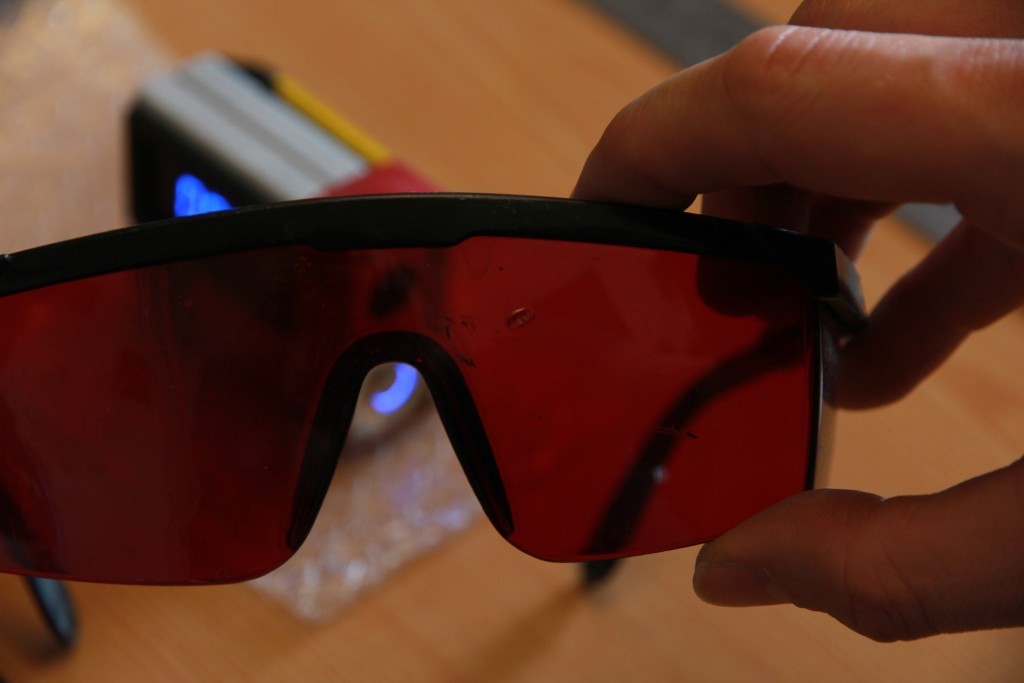
Green goggles test
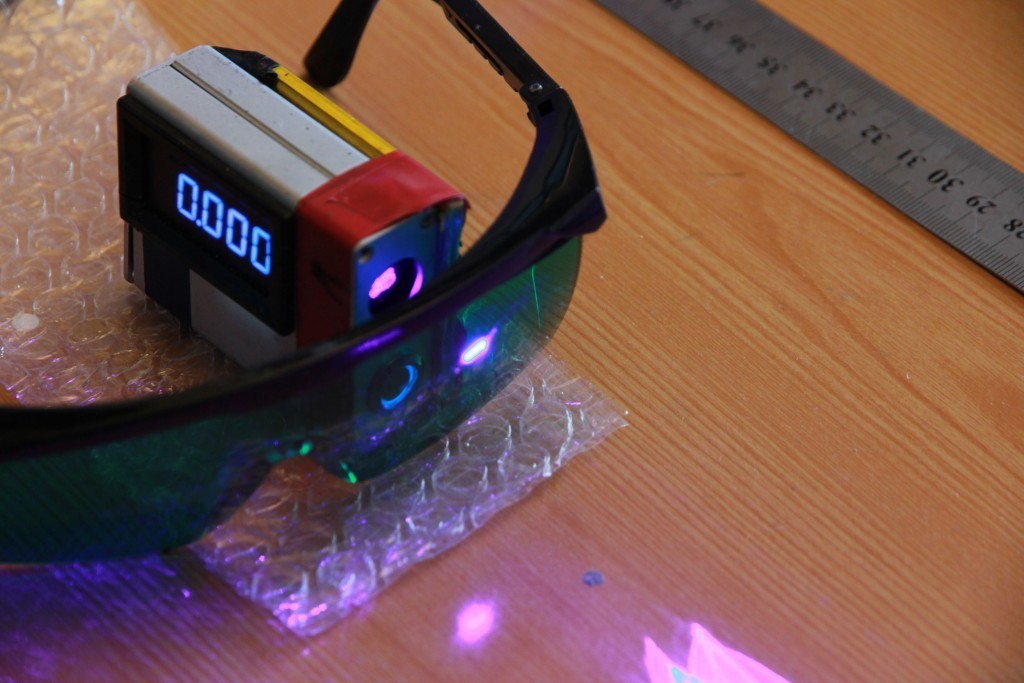
Green goggles after the test
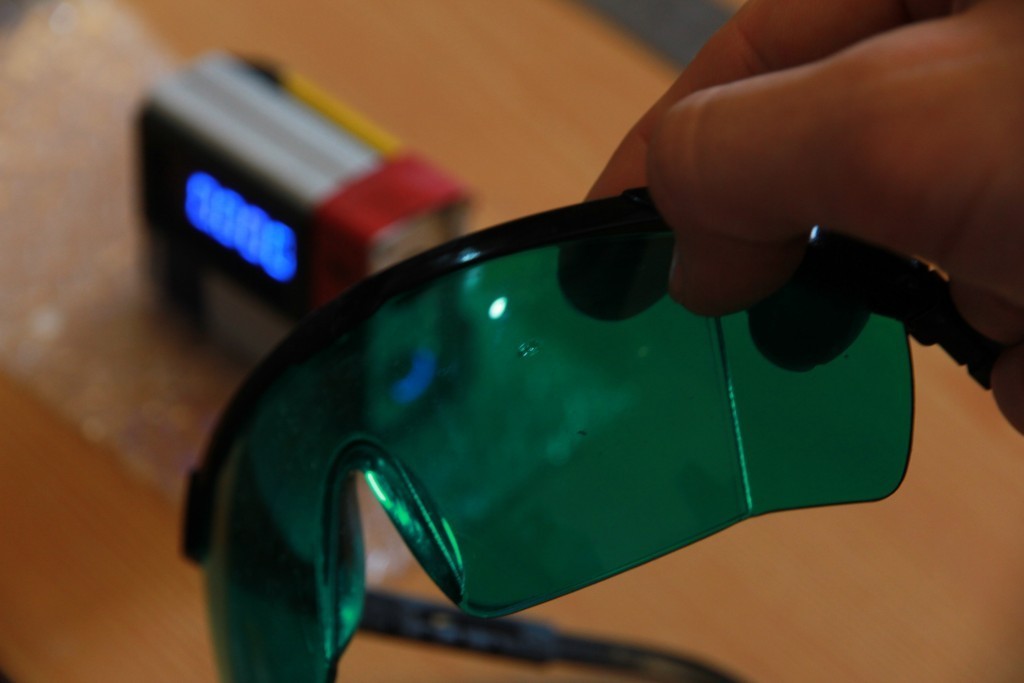
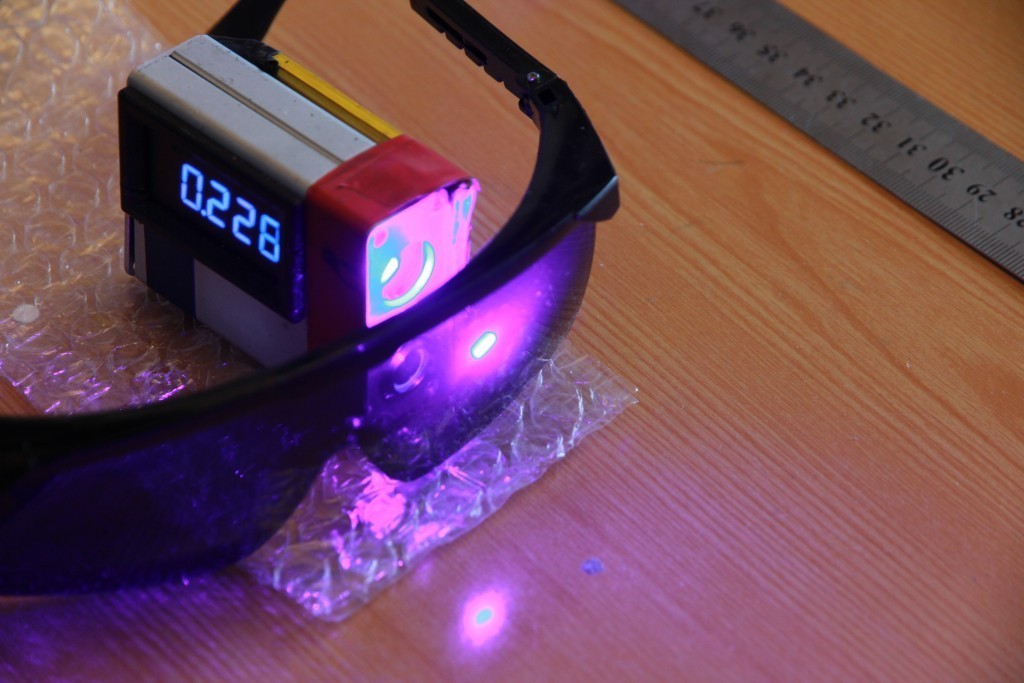
Blue goggles test
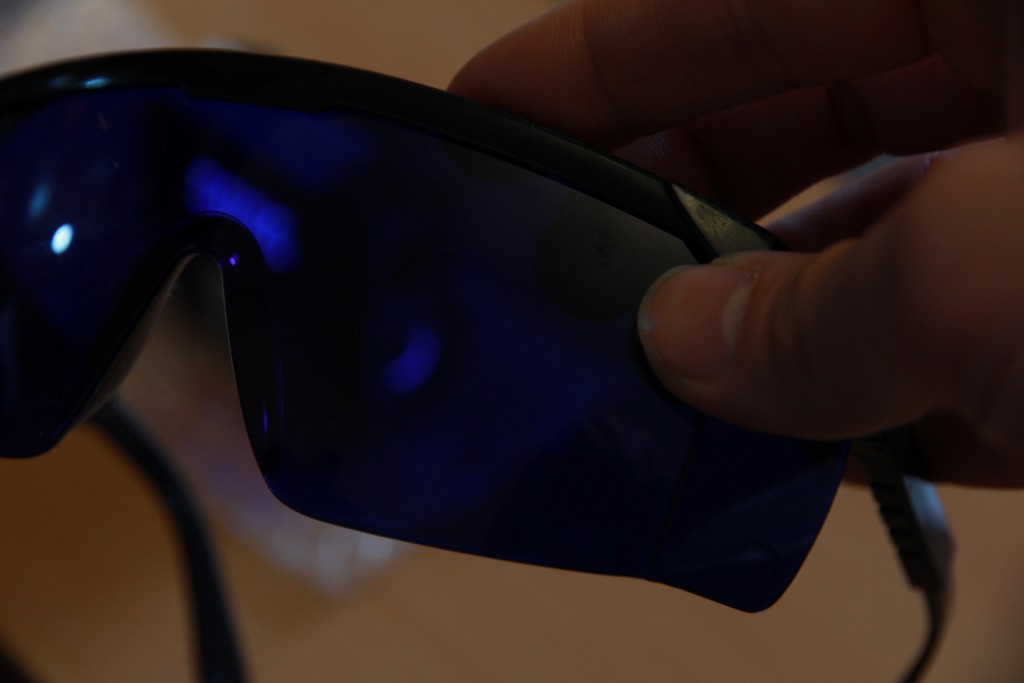
Blue goggles after the test
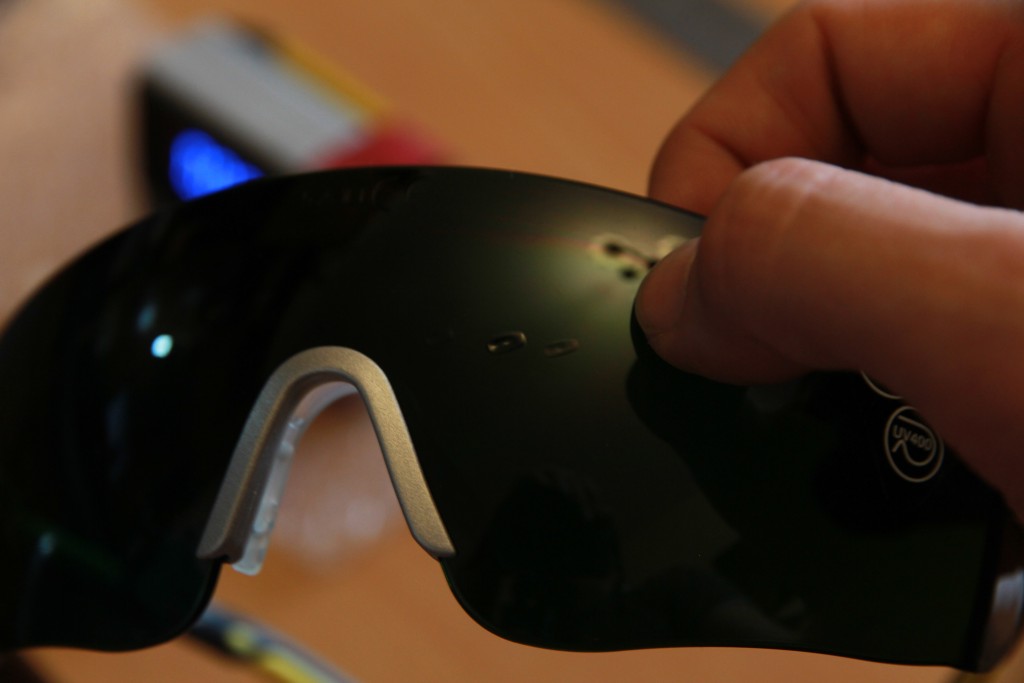
Dark green goggles test
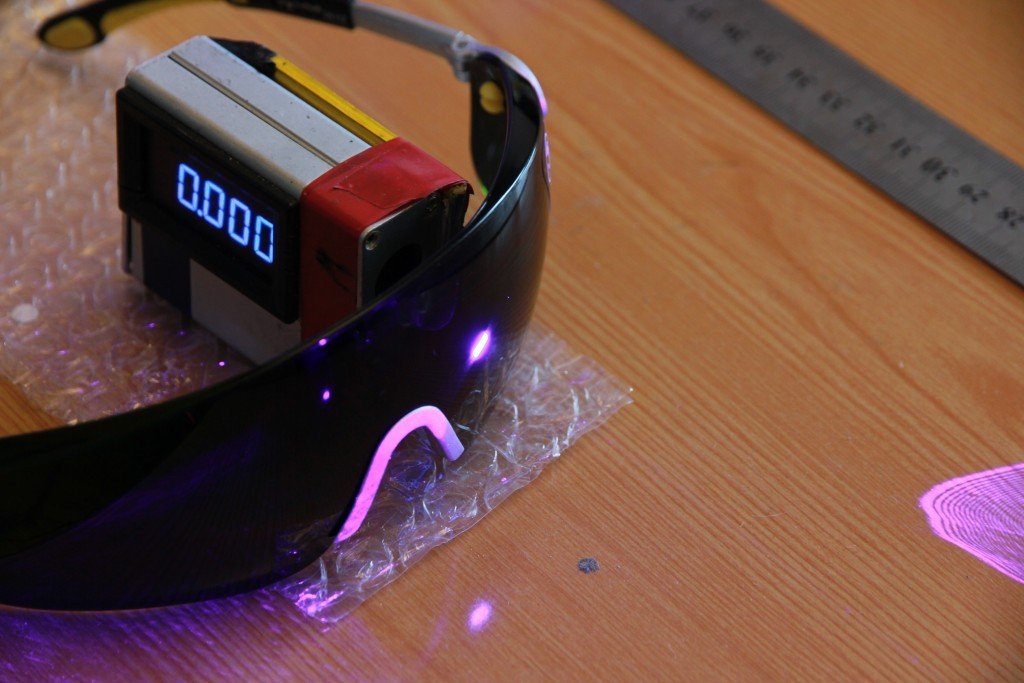
Dark green goggles after the test
Experiment 3
Full power of a 10 watt+ laser on 100% power? Using 3 element lens. Duration – 1 sec.
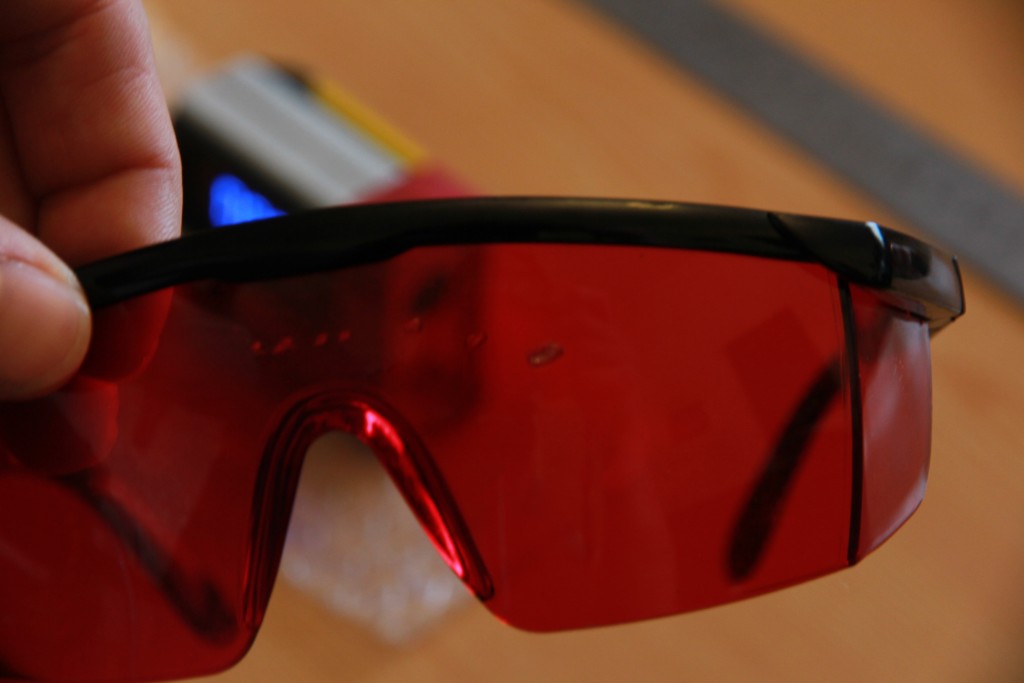
Red goggles test @ 10 watt+ full power
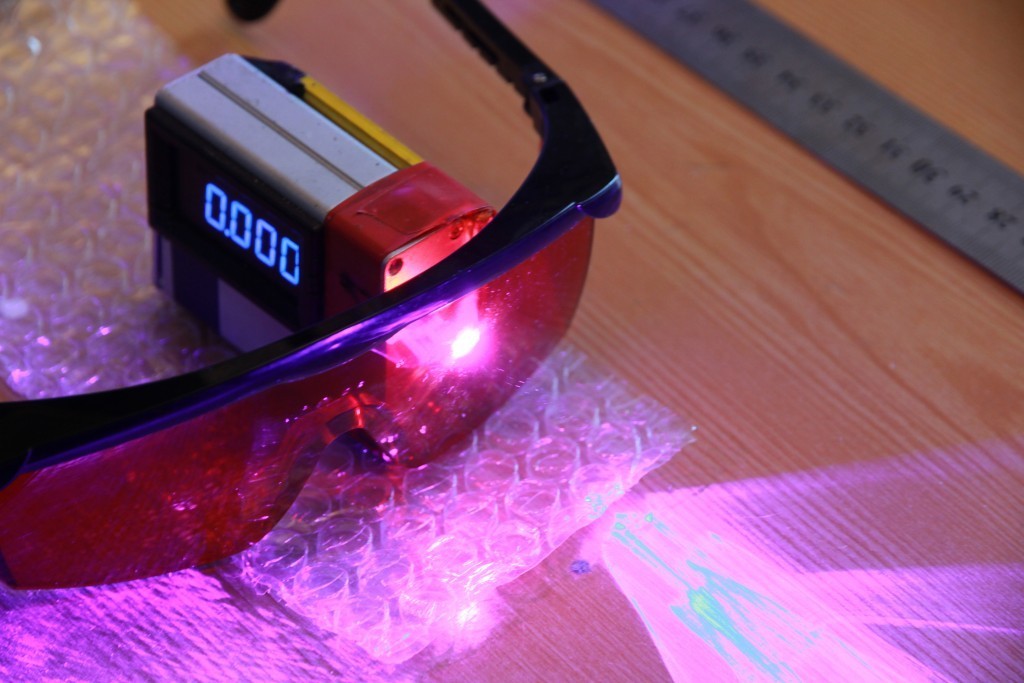
Red goggles after test @ 10 watt+ full power
Green goggles test @ 10 watt+ full power
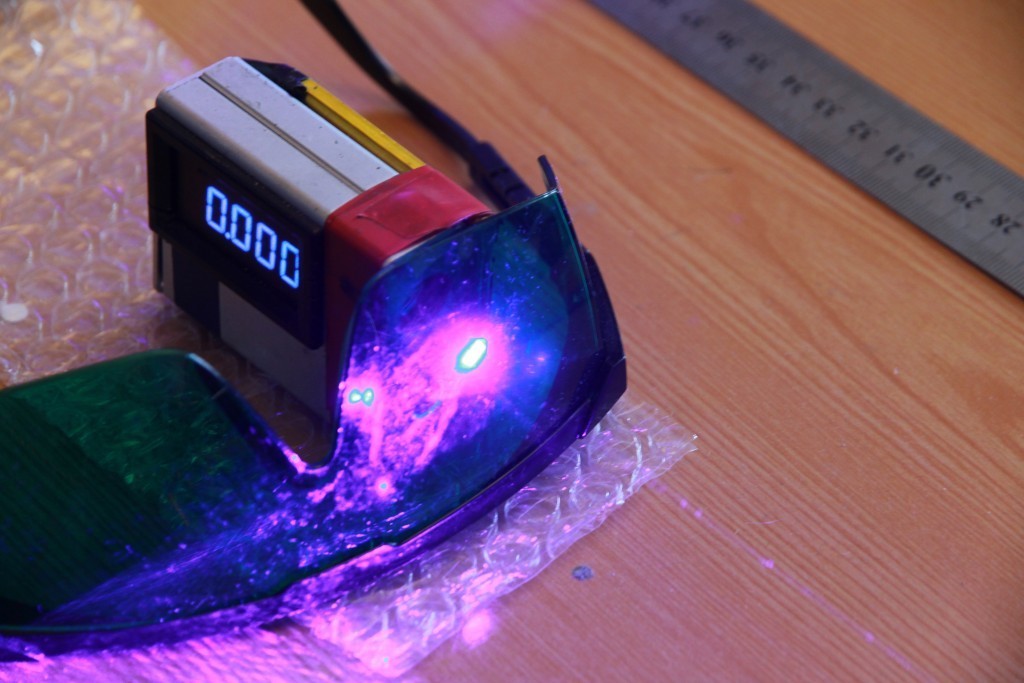
Green goggles after test @ 10 watt+ full power
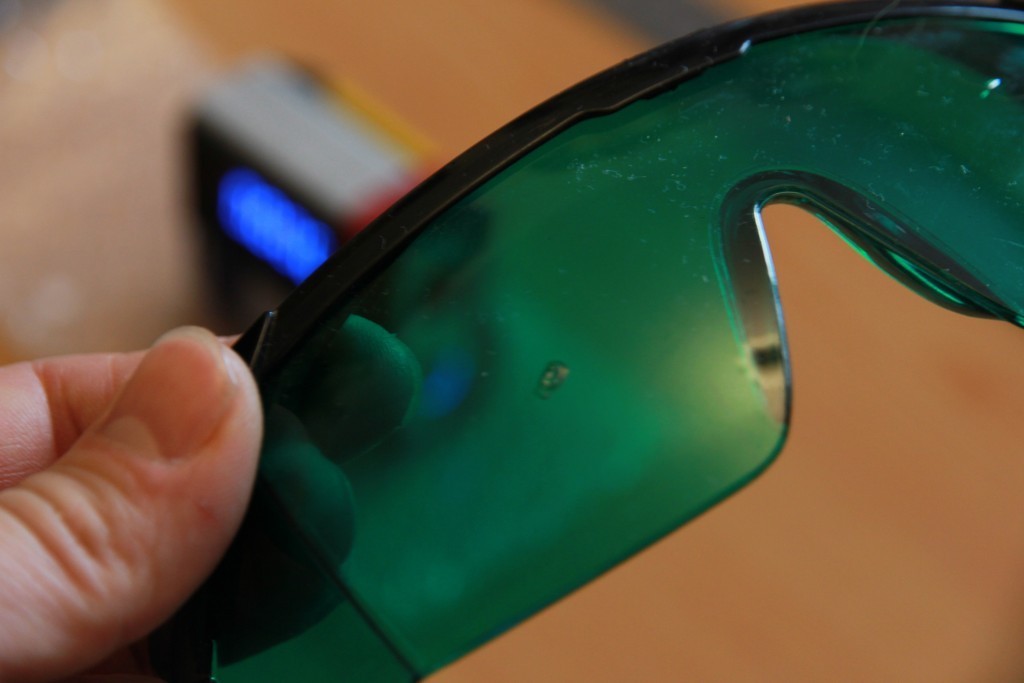
Conclusion
Keep in mind that no goggles give an ultimate protection from a direct laser beam.
The focused laser beam can easily damage any piece of acrylic of glass.
Even if you are more than 1 meter away you still can get pretty high laser radiation if you do not wear goggles.
Laser goggles can protect quite efficiently from an indirect laser beam reflection also if it is not concentrated radiation (not reflected from a mirror or reflective metal).
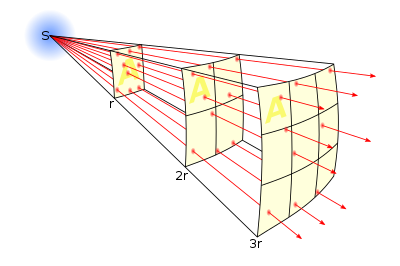
The laser beam density due to the divergence of the beam decreases in proportion to the area of the light spot, that is, due to the linearity of the divergence (diameter is proportional to distance), it turns out that the density of light (power per unit area) is inversely proportional to the square of the distance with some coefficient.